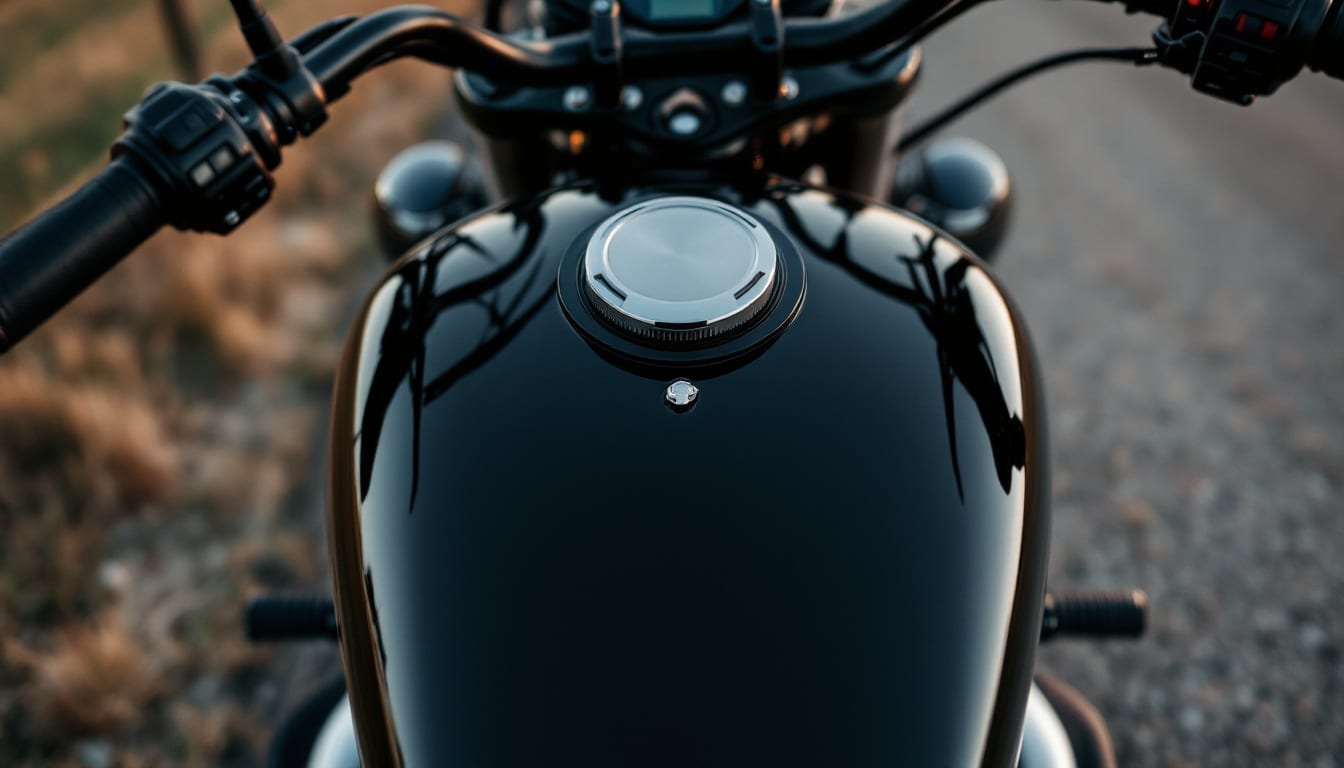
You are at the pump on Highway 377 with an empty tank, the key is in the gas cap, and it will not turn. Or the seat will not release and the registration is underneath it. Both locks fail for the same few reasons, and both usually open with a trick that needs no tools. Call or text (817) 214-2934 if it does not work, but try the steps below first.
Quick Answer
As of October 2026, a motorcycle gas cap that will not open with the key is most often a latch held tight by pressure, a dry or corroded lock, or a worn key. Push down hard on the cap with the heel of your hand while turning the key, and it usually opens. A seat lock that will not release usually needs the seat pressed down at the latch while the key is turned. If a lock has failed, rekeying or replacing a cap or seat lock in Granbury runs $50–$150 per lock, and a new key cut to the bike is $75–$125.
Gas Cap: Try This First
Most modern motorcycles have a flush, hinged filler cap with the lock in the middle. Turning the key withdraws two small latch pins from the rim, and the cap springs up.
Those pins are the reason the cap sticks. The rubber seal under the cap pushes it upward, which presses the pins against the rim. If the seal has swollen, or pressure has built in the tank on a hot day, the pins are pinched and the key cannot pull them back.
The fix:
- Put the key fully in. Check that it is seated all the way.
- Press down firmly on the cap, right on top of it, with the heel of your hand.
- Keep the pressure on and turn the key.
- Still holding the key turned, ease off the pressure and let the cap lift.
Pressing down takes the load off the pins. This opens the majority of stuck caps on the first try.
If that does not do it, try the opposite condition. A tank can also pull a vacuum when the vent is blocked, which sucks the cap down onto its seal. You will sometimes hear a hiss when it finally opens. In that case the lock turns and the cap will not lift. Hold the key turned and lift the edge of the cap with a fingernail. Do not use a screwdriver on the tank paint.
Seat Lock: Try This First
Seat locks come in a few forms. On many bikes the key goes into a lock on the side or tail of the bike and pulls a latch directly. On others the lock pulls a short cable that runs to a latch under the seat. On some, the seat release shares a lock with the helmet holder.
The seat itself is the usual culprit. A passenger pad or a seat that is slightly out of position pushes up against the latch, and the latch binds.
The fix:
- Put the key in and turn it to the release position.
- With the other hand, push down hard on the seat directly over the latch. On most bikes that is the rear of the seat.
- Keep the key turned, release the pressure, and lift.
If the key turns with no resistance at all and nothing happens, the cable has likely stretched, frayed, or come off the latch. That is a mechanical problem behind the lock, and no amount of key work will open it.
If Neither Trick Worked: the Actual Causes
A worn or badly copied key
Motorcycle keys are thin and they wear quickly. The ignition is forgiving of a worn key because it is used daily and its wafers wear to match. The gas cap and seat locks are used far less, so their wafers stay sharp, and they are the first locks to reject a worn key.
If the key starts the bike and will not open the cap, suspect the key before the lock. Compare it with a spare if you have one. A copy made from a worn key carries the wear with it.
A dry or corroded cap lock
A gas cap lock faces straight up. Rain, wash water, and road grit run into the keyway and sit there. Many caps have a small sliding cover over the keyway for that reason, and many of those covers stop closing after a few years.
Corrosion inside the lock holds the wafers in place even with the right key in. You can often feel it: the key goes in with a gritty resistance and stops dead when turned.
A seized latch
Sometimes the lock turns and the latch pins themselves are stuck. Dried fuel residue and corrosion are the usual causes on a bike that has been sitting. The key will turn part way and stop.
The wrong key
Used bikes change hands with mixed locks. A previous owner replaced the ignition, or fitted a tank from another bike, and never matched the locks. The bike arrives with one key that does the ignition and a cap that needs a key nobody handed over. If your key has never opened the cap in the time you have owned the bike, this is the likely story.
A broken key
A snapped key in a gas cap is common, because the cap is the lock people force. If part of the blade is still in the lock, do not push anything in after it. The piece can usually be extracted and the lock saved.
The same locks, and the same failures, turn up on four-wheelers and side-by-sides. Our tractor, UTV and farm equipment key cost guide covers those machines.
What Not to Do at the Pump
- Do not force the key. A motorcycle key will twist and snap well before a jammed latch gives way.
- Do not spray flammable penetrating fluid around a hot engine or exhaust. If the bike has been running, let it cool first.
- Do not pry the cap with a screwdriver. It dents the tank and bends the cap, and the cap still does not open.
- Do not drill the lock. A cap lock sits directly above the fuel. Drilling throws metal into the tank and makes sparks over fuel vapor. This is the one lock on the bike that should never be drilled by an owner.
- Do not ride on fumes to "sort it out later." If the cap will not open, deal with it where the bike is parked.
Lubricating a Cap or Seat Lock the Right Way
On a cool bike, with no ignition sources nearby:
- Blow loose grit out of the keyway.
- Use a dry lock lubricant, graphite or PTFE-based, in a small amount.
- Work the key in and out ten or twelve times before turning it.
- Try the press-and-turn method again.
Give the lubricant a few minutes. A lock that has been dry for years sometimes frees up on the third or fourth attempt.
Likely Causes and What Each Costs
| What you find | Likely cause | Fix | Typical Granbury range (October 2026) |
|---|---|---|---|
| Cap opens when pressed down | Latch pins under seal pressure | Nothing to buy; replace a swollen seal later | Free |
| Lock turns, cap held down, hiss on opening | Tank vent blocked | Vent or cap service by a motorcycle shop | A mechanical repair |
| Key starts the bike, will not open cap or seat | Worn key | New key cut to the bike | $75–$125 |
| Gritty, stops dead, right key | Corroded lock | Lock cleaned or replaced and set to your key | $50–$150 per lock |
| Key has never fitted the cap | Mismatched lock from a previous owner | Cap lock rekeyed to the ignition key | $50–$150 per lock |
| No key for the bike at all | Key lost | Key originated from a lock | $100–$300 |
| Key snapped in the cap | Forced key | Extraction, then key or lock work | Low end of our $75–$350 range |
| Key turns freely, seat stays latched | Cable stretched or detached | Seat opened, cable repaired by a motorcycle shop | Entry quoted after we see it |
These are the same bands as our motorcycle key replacement cost guide. Mobile service anywhere inside 25 miles of Granbury is included in the quote.
Getting the Whole Bike Onto One Key
A motorcycle normally leaves the factory with one key for everything: ignition, steering lock, gas cap, seat, and any factory luggage. After a few owners that is often no longer true.
Putting it right is ordinary lock work. Each small lock is taken apart and its wafers are changed to match the key you want to keep, normally the ignition key. A gas cap lock, a seat lock, and a pair of saddlebag locks can all be done on one visit, and doing them together costs less than doing them one at a time. The rekey band is $50–$150 per lock.
If the ignition itself is stiff, that is worth mentioning when you call. The most common motorcycle call we take is a motorcycle key not turning in the ignition, and nine times out of ten that one is the steering lock under load, which has its own two-second fix.
Chipped Keys Do Not Change This Job
Many newer motorcycles have a transponder chip in the key head. That chip matters to the ignition and the engine computer. It has nothing to do with the gas cap or the seat lock, which are purely mechanical.
So a cap that will not open is never an "electronic" problem, whatever the bike. A new mechanical key blade will open the cap. Starting the bike with that key is a separate matter, and on a chipped bike it needs a programmed key, which sits in our $80–$350 programming band where the system is one we support. The transponder key programming page explains how that part works.
When to Call a Locksmith and When to Call a Bike Shop
Call us when:
- The key will not turn in the cap or seat lock after the press-and-turn method and lubrication.
- The key has snapped in a lock.
- The key works the ignition and not the other locks.
- The bike came with mismatched locks.
- You have no key at all.
Call a motorcycle shop when:
- The lock turns and the cap is held down by vacuum. The tank venting needs attention.
- The seat cable is stretched or broken.
- The cap seal, hinge, or latch body is damaged.
- There is fuel leaking around the filler.
We will tell you on the phone which side of that line your problem is on. There is no charge for that conversation.
What We Need Before We Come Out
Text these to (817) 214-2934:
- Year, make, and model of the bike.
- A photo of the key and one of the lock that is stuck.
- What the key does: will not go in, will not turn, turns with nothing happening, or broken off.
- Whether the key works the ignition.
- Where the bike is: a gas station, your garage, a storage unit, the side of FM 4.
- Proof of ownership: registration or title, with matching ID. We check it on every job.
Keeping These Locks Working
- Clean the grit out of the cap lock a couple of times a year, and give the lock a little dry lubricant.
- Use the seat lock now and then, even if you never carry anything under the seat.
- Replace a worn key before it breaks. Have it cut to the lock, not copied from the worn one.
- Keep a spare key somewhere other than under the seat.
- After washing the bike, work the key in the cap once so water does not sit in the lock.
The Motorcycle Safety Foundation recommends a pre-ride check of the whole machine. Adding the locks to that habit a few times a season costs nothing.
Frequently Asked Questions
Why won't my motorcycle gas cap open with the key? Most often the latch pins are pinched by pressure from the cap seal or the tank. Press down hard on the cap while turning the key. If that fails, the usual causes are a dry or corroded lock or a worn key.
How much does it cost to fix a motorcycle gas cap lock in Granbury? As of October 2026, rekeying or replacing a gas cap or seat lock runs $50–$150 per lock. If the lock is fine and the key is worn, a new key cut to the bike is $75–$125.
My key starts the bike but won't open the gas cap. Why? The ignition wears along with the key, so it tolerates a worn key. The gas cap lock is used less and stays sharper, so it rejects the same key. A new key cut to the lock's correct depths usually fixes it.
My motorcycle seat won't unlock. What should I try? Turn the key to the release position, push down hard on the seat over the latch, then lift while holding the key turned. If the key turns freely with no effect, the release cable has probably stretched or come off.
Can I drill out a stuck gas cap lock? You should not. The lock sits directly above the fuel, and drilling creates sparks and drops metal into the tank. A locksmith can usually open or extract without drilling.
Does a chipped motorcycle key affect the gas cap? No. The chip only matters to the ignition and engine computer. The gas cap and seat locks are mechanical, and any correctly cut blade opens them.
Can you make my gas cap, seat and ignition use the same key? Yes. The smaller locks are rekeyed to match the ignition key. Doing several locks on one visit costs less than one at a time, at $50–$150 per lock.
Do you come to me if I am stuck at a gas station? Yes. Mobile service anywhere inside 25 miles of Granbury is included in the quote, with no separate trip fee.
Open It Without Breaking the Key
Press down, then turn. That opens most stuck gas caps and most stuck seats. If it does not, stop before the key bends and send us a photo of the key and the lock. Call or text (817) 214-2934, weekdays 8:00 AM to 7:00 PM, Saturdays 8:00 AM to 5:00 PM, with 24/7 emergency availability for lockouts. You can also request service through our contact page or read about our lock rekey service.