TL;DR — The 30-Second Version
If you don't know what kind of key your car uses, you'll get an inaccurate quote on the phone — and you'll probably overpay. Here is the short version for a transponder key Granbury customer working through replacement options:
- Mechanical key (1995 and older, mostly): $25–$75. Cut by code or impression. No electronics.
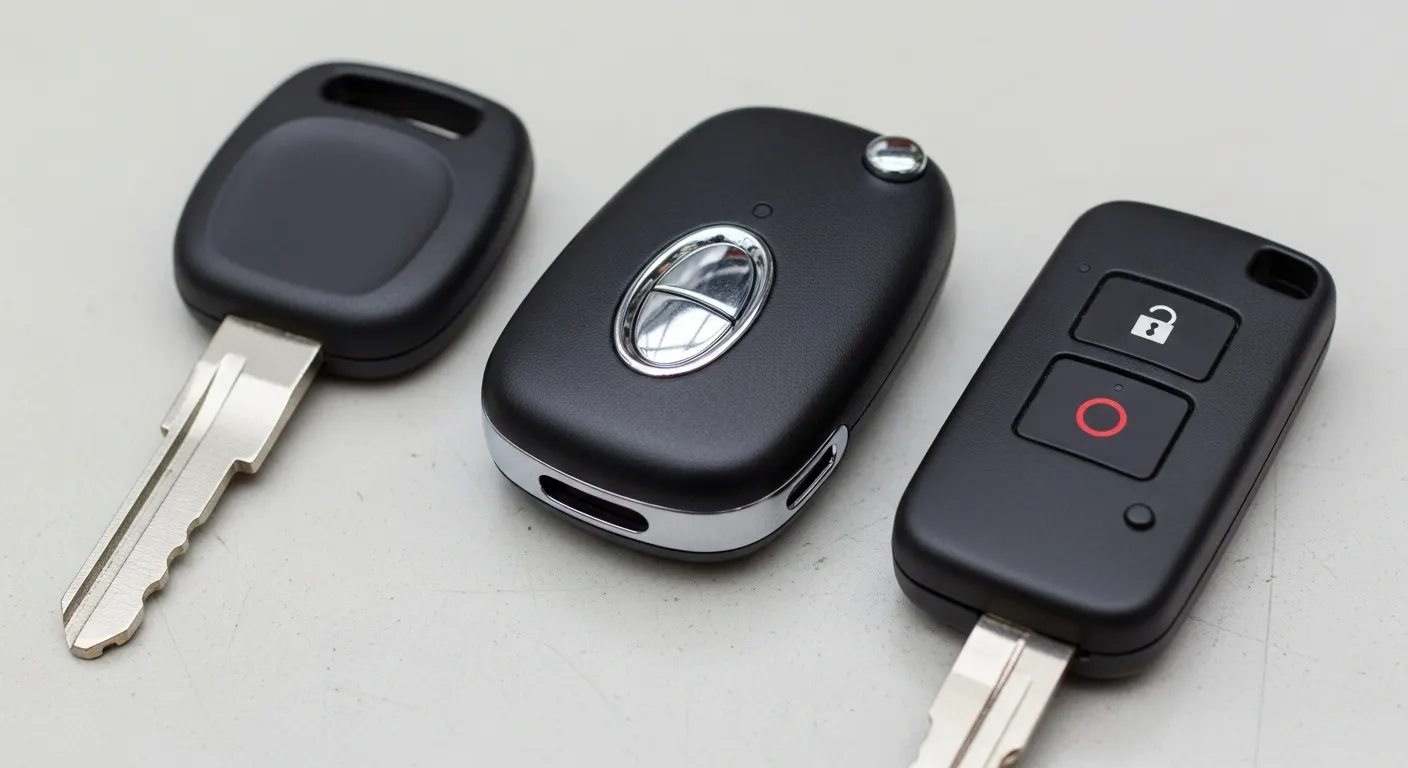
- Transponder key / chip key (1998–2012): $125–$220. Has a hidden chip inside the plastic head. Must be programmed.
- Remote head key / flip key (2005–2018): $180–$320. Transponder chip plus a built-in remote with lock/unlock buttons.
- Proximity smart key / push-to-start fob (2014–present): $220–$450. No metal blade in everyday use. Talks to the car wirelessly.
- European luxury smart key (BMW, Mercedes, Audi, Range Rover): $350–$650. Same idea as above but encrypted differently.
If you can identify which of those five you own before you call, a legitimate Granbury TX locksmith can give you a real number in 30 seconds. If you can't, no honest shop can quote you accurately — and the dishonest ones will use that confusion to spike the bill on arrival.
Why the Distinction Matters in Granbury
Hood County's vehicle mix skews older than the Dallas–Fort Worth average. The U.S. Bureau of Transportation Statistics reports that the average age of light vehicles in operation in the United States reached 12.6 years in 2023 (BTS average vehicle age data). In a market like Granbury — a lot of long-haul work trucks, lake-house second vehicles, and resale inventory from the used-car lots along Highway 377 — that average is, anecdotally, even higher.
What that means for key replacement: a single locksmith van in Granbury, on a typical Saturday, might handle a 2003 F-150 chip key, a 2012 Camry remote head, and a 2023 RAV4 proximity fob all before lunch. Three completely different keys, three different programmers, three different prices. The confusion isn't your fault — the industry built it.
Type 1: The Mechanical Key (Pre-1998, Rare Today)
A mechanical key is just shaped metal. No chip, no electronics, no programming. You can duplicate one at any hardware store for under $10, and you can have one cut from your VIN by an automotive locksmith for $25–$75.
You almost certainly do not have one of these unless you drive a pre-1998 vehicle (and even then, some makes — Ford, GM — added basic transponders earlier than the industry average). If your key has plastic on the head and no buttons, look closer before assuming it's mechanical: most "plain" plastic-headed keys built after 1998 still contain a hidden transponder chip.
How to tell
- Key is all metal, or has a plain plastic head with no buttons and no embedded markings.
- Vehicle is 1997 or older for most makes.
- Inserting any cut-to-match copy starts the engine. (If the engine cranks but won't run, you have a transponder key — read on.)
Type 2: The Transponder Key / "Chip Key" (1998–2012)
This is what the industry calls a transponder key, and what most customers call a "chip key." It looks almost identical to a mechanical key, but the plastic head contains a small glass-encapsulated RFID chip — typically running a standard called Texas Crypto or Philips Crypto 1/2, depending on the manufacturer.
When you turn the key in the ignition, the immobilizer ring antenna around the cylinder reads the chip's unique ID. If the ID matches one of the keys learned to the vehicle, the immobilizer releases the fuel injectors and starter. If it doesn't match, the engine cranks for a few seconds and then dies. That's the signature symptom — and it's how most people first learn their key isn't "just" a key.
According to research published by the National Insurance Crime Bureau, vehicles equipped with electronic engine immobilizers experience dramatically lower theft rates than vehicles without them; the technology is credited with one of the largest single-factor declines in U.S. vehicle theft since the late 1990s (NICB published research on immobilizer effectiveness). That's why the chip exists, and that's why your replacement costs $150 instead of $15.
Real Granbury pricing for transponder keys
- Cut and program one key, with another working key present: $125–$180, on-site, 30–45 minutes.
- All-keys-lost (cut from VIN, program without a master): $175–$220, on-site, 45–75 minutes.
- Duplicate of an existing working key: $90–$140 at a mobile locksmith; sometimes available at big-box stores for $50–$80 if your vehicle is on their supported list. The big-box machines don't support every make, especially Asian imports after 2010.
How to tell you have a transponder
- Plain plastic-headed key, no buttons.
- Vehicle built between 1998 and roughly 2012 (later for budget trims and commercial vehicles).
- Engine cranks but won't stay running when you try an uncut/uncoded copy.
Type 3: The Remote Head Key / Flip Key (2005–2018)
A remote head key is a transponder key with a built-in remote — the lock, unlock, trunk, and panic buttons live in the head of the same physical key. A flip key is the same idea with a folding metal blade that springs out at the press of a button (very common on European and late-model Korean vehicles).
Mechanically, the key works exactly like a transponder. The remote portion is a separate circuit board that broadcasts an encrypted rolling code on the 315 MHz or 433 MHz radio band (depending on whether the vehicle was built for the North American or European/Asian market). Both halves of the key — the transponder chip and the remote — must be programmed to your vehicle independently.
"Modern vehicle keys are layered systems. The mechanical blade, the immobilizer chip, and the radio remote are three separate authentications that all have to agree before the car will operate normally. That layered design is what makes professional programming equipment necessary." — Associated Locksmiths of America (ALOA), the trade association that issues professional certifications for the locksmith industry (ALOA published education materials)
Real Granbury pricing for remote head keys
- Cut and program one key, with a working key present: $180–$260, on-site, 45–60 minutes.
- All-keys-lost: $240–$320, on-site, 60–90 minutes.
- Flip key (European, Korean): add $30–$70 for the upgraded blank.
How to tell
- Key has buttons on the head (lock, unlock, sometimes trunk and panic).
- Either fixed-blade or folding-blade design.
- Still inserts into a key cylinder to start the engine — no push-button start.
Type 4: The Proximity Smart Key / Push-to-Start Fob (2014–Present)
This is what most customers call a smart key or key fob, and what manufacturers variously brand as "Smart Key" (Toyota, Lexus, Kia, Hyundai), "Intelligent Key" (Nissan, Infiniti), "Advanced Key" (Honda, Acura), "Keyless Go" (Mercedes), "Comfort Access" (BMW), or "SYNC/MyKey" (Ford). They all do roughly the same thing.
A proximity smart key broadcasts a low-frequency wake-up signal continuously. When you walk up to the car with the fob in your pocket, the car's interior antennas detect the fob's presence, an encrypted challenge-response handshake happens in milliseconds, and the door handle senses your hand approaching and unlocks. Press the start button, and the immobilizer confirms the fob is still inside the cabin before releasing the engine.
There's usually a small emergency mechanical blade hidden inside the fob — pull a release tab to extract it. That blade exists for one purpose: unlocking the driver door when the fob's battery is dead. It does not start the car. To start the car with a dead fob, you typically hold the fob against a marked spot on the steering column (called the passive entry backup zone) while pressing the start button, which uses inductive coupling to wake the dead fob just long enough to authenticate.
Real Granbury pricing for proximity smart keys
- Cut and program a smart key with another working fob present: $220–$340, on-site, 60–90 minutes.
- All-keys-lost (cut from VIN, program with no master): $280–$450, on-site, 90–120 minutes.
- Replacement of a single broken/lost fob on a 2020+ vehicle: trends toward the upper end of the range because of manufacturer per-token fees.
What drives the price within that range
Smart-key replacement cost has three real cost drivers, all of them outside the locksmith's control:
- The blank. A genuine OEM smart-key blank from the manufacturer wholesales for $80–$200 depending on make. Aftermarket equivalents (made by reputable suppliers like Strattec, Ilco, KeyDIY, Xhorse) run $40–$120 and work on most non-European vehicles.
- The programmer. A diagnostic programming tool that supports modern smart keys costs the locksmith $4,000–$15,000 up front, plus $400–$2,000 per year in software subscriptions, plus per-vehicle token fees on some makes.
- NASTF Secure Data Release. The National Automotive Service Task Force administers the program that grants vetted locksmiths access to manufacturer key codes and immobilizer data. Registration requires background checks, insurance, and per-transaction fees. Those costs are baked into all-keys-lost pricing on 2017+ vehicles.
How to tell you have a smart key
- Car has a push-button start instead of a key cylinder.
- Fob is rectangular plastic, usually with lock/unlock buttons but no visible cut blade in everyday use.
- Doors unlock when you grab the handle with the fob nearby.
Type 5: European Luxury Smart Keys (BMW, Mercedes, Audi, Range Rover)
European luxury smart keys deserve their own category because the encryption schemes are different — and more expensive to program.
BMW uses what's called the CAS (Comfort Access System) module on vehicles built roughly 2004–2014, then transitioned to FEM (Front Electronic Module) and BDC (Body Domain Controller) on later vehicles. Mercedes uses an Infrared Smart Key system through about 2014, then transitioned to FBS4 (the encrypted "yellow" key). Audi/VW uses Megamos Crypto and AES-based immobilizers. Range Rover uses Jaguar Land Rover's proprietary IDS/SDD system.
Each of these systems requires either a specialized programmer (Autel IM608, Xhorse Key Tool Plus with the appropriate add-on, or AVDI for the high-end European work) or, on some vehicles, a per-vehicle token purchased through NASTF for $50–$200. That cost gets passed through.
Real Granbury pricing for European smart keys
- Spare key with master present: $300–$500, on-site, 75–120 minutes.
- All-keys-lost: $450–$650, on-site, 120–180 minutes. May require pulling and reading the EWS/CAS/FEM/FBS module on the bench.
- Vehicles where the dealer is genuinely cheaper: very late-model Range Rovers, certain Porsche models, and some Lamborghini/Bentley products where the data simply isn't available outside the manufacturer. Honest locksmiths will tell you when this is the case.
How to Identify Your Key Type Before You Call
Spend 60 seconds on this before you dial. It changes the conversation completely.
- Look at the head of the key. Plastic, buttons, both, or neither?
- Check the start system. Insert-and-turn key cylinder, or push-button start?
- Count buttons. None, two (lock/unlock), three (add trunk), four-plus (add panic, remote start, sliding door)?
- Photograph the key. Front and back. A clear photo lets a locksmith identify the exact part number, programming method, and price band in seconds.
- Have the VIN ready. Windshield base, driver-side door jamb, or registration. The VIN tells the locksmith what immobilizer system is in the car, which matters more than the year/make alone.
A legitimate Granbury TX locksmith will ask for all five of these on the call. If a dispatcher quotes you $39 without asking, you're talking to a call center, not a technician — see the FTC's published guidance on locksmith scams for what happens next (FTC consumer guidance on hiring a locksmith).
When You're Buying a Used Car in Hood County: Ask About the Keys
If you're shopping the used-car lots along Highway 377, on Granbury Square, or in Acton, ask the seller two questions before you sign:
- How many working keys exist? If the answer is "one," budget $150–$450 for a spare before the day you need it. Losing the only key of a 2018+ vehicle in a Lake Granbury boat-ramp parking lot at 9 PM on a Saturday is a four-figure problem.
- Are both keys electronic, or is one a "valet" key? A valet key opens the doors but doesn't start the engine. It is not a backup. If "the second key" is a valet, treat it as having only one functional key.
This single conversation has saved customers in Hood County hundreds of dollars in unplanned replacement costs.
Frequently Asked Questions
Can a hardware-store key copy work for a transponder key?
No. The hardware store can duplicate the mechanical blade so the key turns the lock cylinder, but the duplicate will not contain a programmed transponder chip — so the engine will crank and immediately die. To get a working duplicate, you need a locksmith with a transponder programmer.
How do I know if my fob needs a new battery or a new fob?
Symptoms of a dead battery: shorter range than usual, intermittent button response, push-to-start fails until you hold the fob against the steering column. Symptoms of a failed fob: nothing works even after a fresh CR2032 battery, or buttons feel mushy from water damage. A locksmith or auto-parts store can test the fob's RF output in under a minute.
Is a smart key worth keeping after the fob breaks?
Sometimes. If the internal circuit board is salvageable, a locksmith can transplant it into a new shell for $40–$80 instead of buying a complete replacement fob for $220–$450. Worth asking about before you commit to a full replacement.
Do you program aftermarket key fobs?
For most non-European vehicles, yes — reputable aftermarket blanks from Strattec, Ilco, KeyDIY, or Xhorse work reliably and are part of standard inventory. European luxury work is more often OEM-only for warranty and reliability reasons.
What if my key was working yesterday and won't work today?
Three common causes: dead fob battery (cheapest, fix yourself with a CR2032), water damage from a lake or pool drop (usually requires a new fob), or the immobilizer learning the key incorrectly after a recent battery disconnect or jumpstart (requires re-programming, $75–$125 on-site).
Bottom Line
Reviewed and re-priced September 2026. The bands below still hold for Hood County, and the single most common reason a real quote lands above them is an all-keys-lost job rather than an add-a-key one. If you want the fob side broken down on its own, our 2026 key fob replacement cost guide covers what moves a fob quote up or down, and if every key has stopped working at the same time, read why that is almost never the keys before buying one.
The five categories above — mechanical, transponder, remote head, smart key, and European luxury — cover essentially every vehicle on the road in Hood County. If you can identify which category you're in before you call, you can sanity-check the quote you're given against the ranges in this article and know immediately whether you're being treated fairly.
For most Granbury drivers, the realistic out-the-door cost for key fob programming Hood County technicians charge is $125–$220 for a transponder, $180–$320 for a remote head key, and $220–$450 for a proximity smart key. European luxury runs higher and takes longer. None of those numbers should surprise you on the bill, because none of them should surprise the locksmith on the phone.
If the quote you're getting falls outside those ranges in either direction, ask why. The answer should be specific (vehicle year, key type, all-keys-lost surcharge, after-hours premium), not vague. Vague is the warning sign.